Games often overestimate how much a sword or an axe weighs, and the assumption that many people make is that this lump of steel in your hand is a great burden, although this assumption has been working is way out.
The simple fact of the matter is, medieval weapons are quite light.
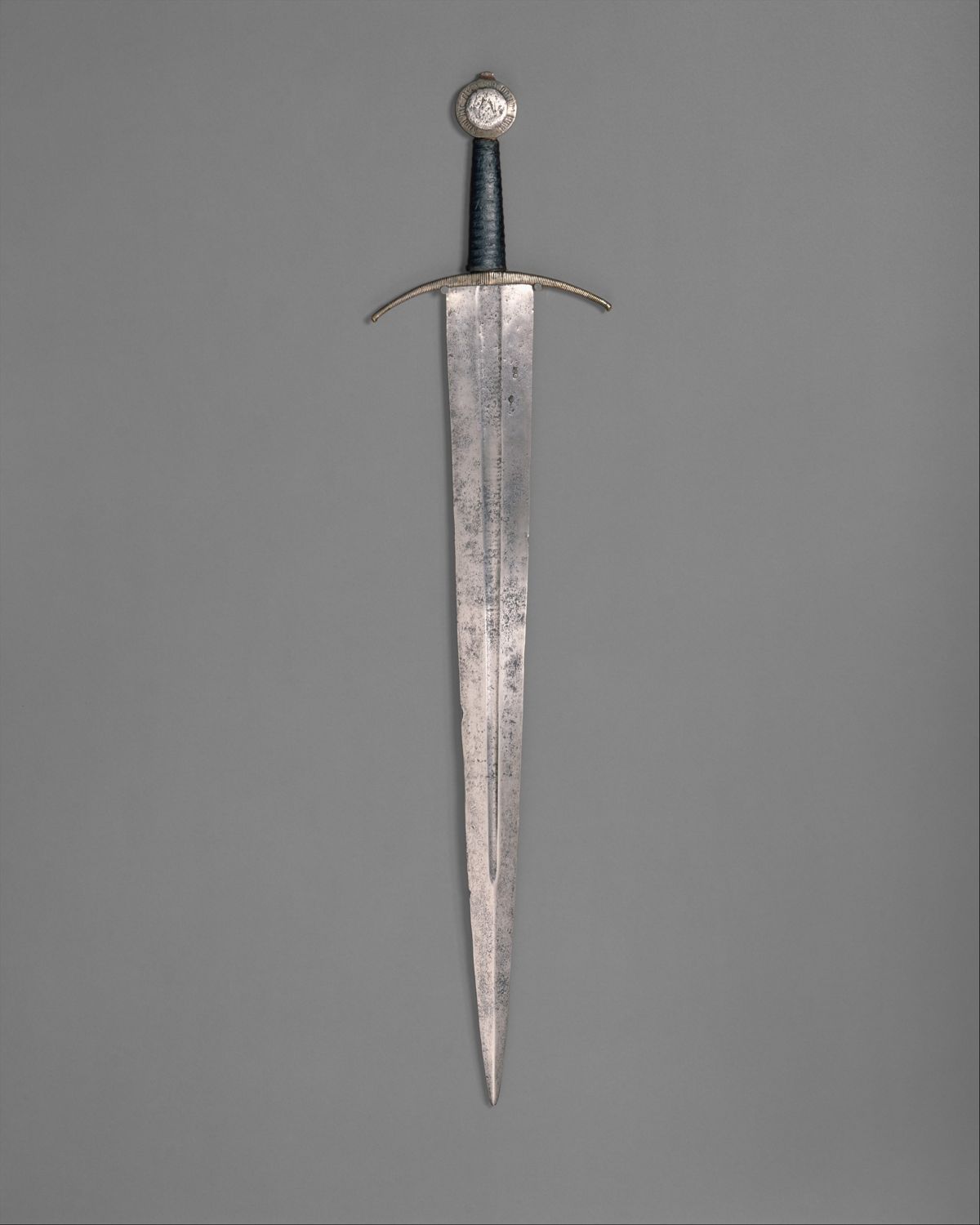
The medieval Arming Sword, the single most common sword of the middle ages. One handed, ext to carry, you wouldn’t expect this one to be that heavy, and it isn’t. Arming Swords tend to weigh between 3 and 4 pounds / 1⅓ and 1.8kg, that’s it! This particular example weighs 3 lbs. 11 oz / 1.6kg.
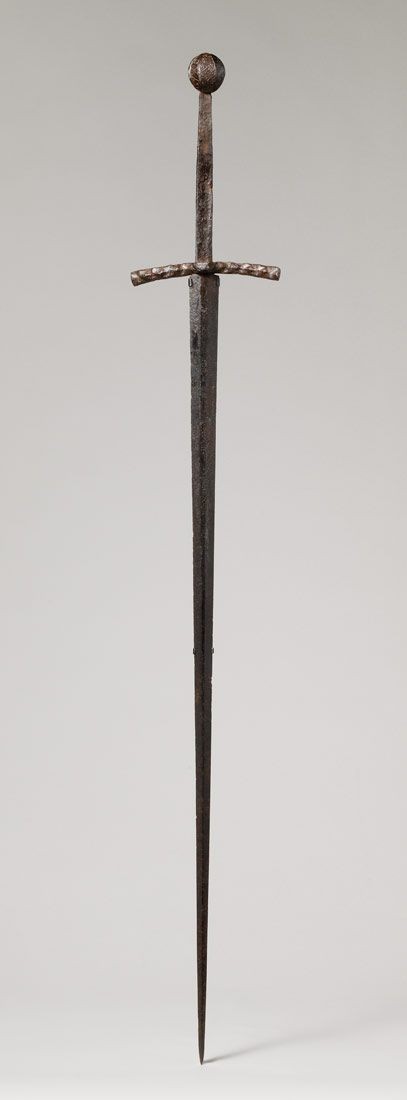
The Longsword, a much longer weapon than the Arming Sword, as the name implies, and obviously much heavier. But it’s not.
Standard Longswords, especially later period ones designed more for thrusting (like the one pictured above,) can be shockingly light. They can weigh in the same range as arming swords, although they can weigh more as well.
Longswords tend to sit between 3 and 5 pounds /
1⅓ and 2.25kg, and this example is 3 lbs. 7oz. / 1.5kg meaning it weighs less than the Arming Sword pictured before!
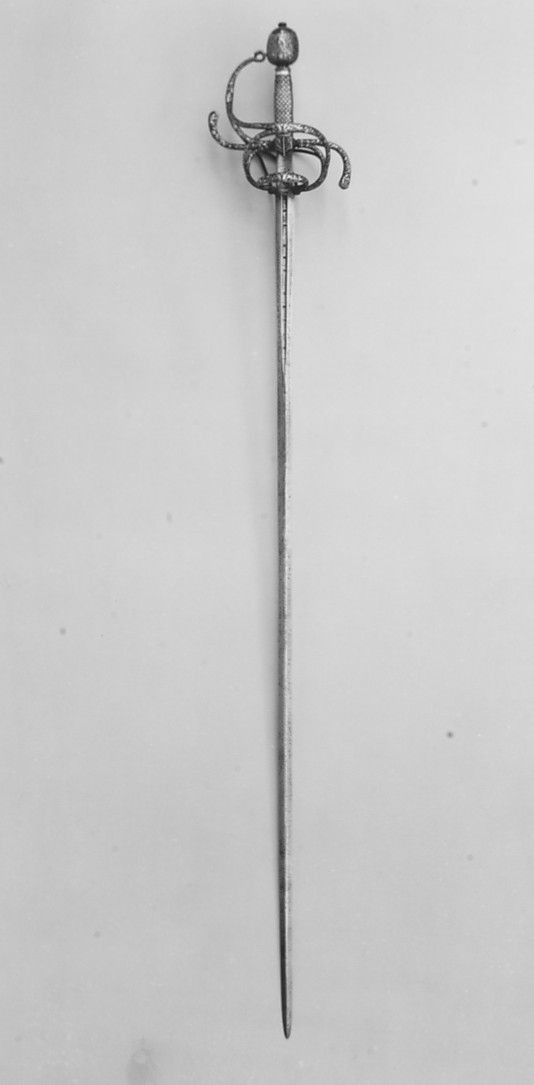
The Rapier, a famously light and nimble weapon that is also clouded in a fog of incorrect assumptions. The rapier is a long weapon. This example measures 45 inches in the blade and isn’t even among the longest I’ve seen.
Including all that weight from the steel basket around your hand, and it starts to add up. Rapiers can however be quite light, so including the extremes of the spectrum you end up with a range of between 2.5 pounds and 5 pounds / 1.1 and
2.25kg. This particular example is on the lighter side, weighing 2 lbs. 13 oz / 1.3kg.
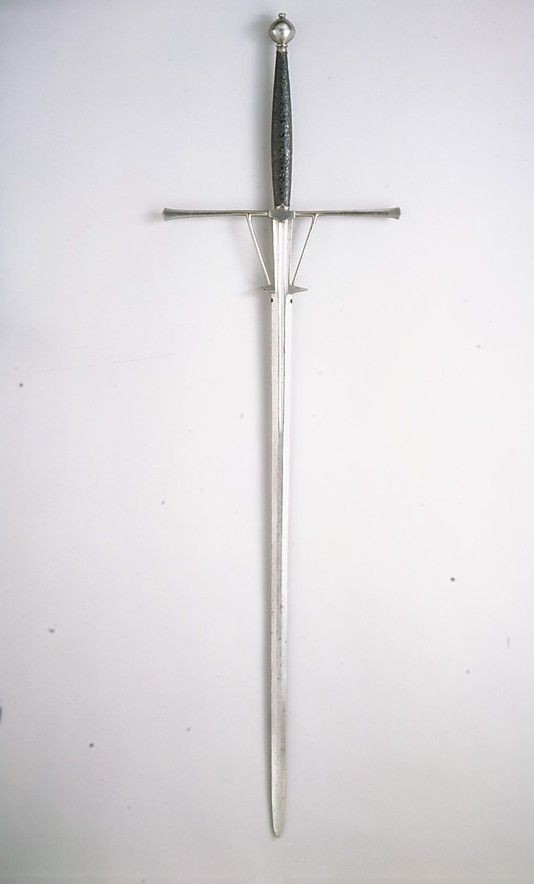
The Zweihander, the famous greatsword, surely this is a much heavier weapons! Well of course it’s heavier than the others, the entire thing is five and a half feet tall, however they are deceptively light.
Zweihander weigh, on average, 6 pounds / 2.7kg. That’s it, only 6 pounds. Some on the heavier side weigh about 7lbs / 3.1kg, but they rarely exceed that. This example weighs 6 lbs. 2 oz. / 2.8kg.
Moving away from swords, axes will surely be heavier, won’t they? Think again.
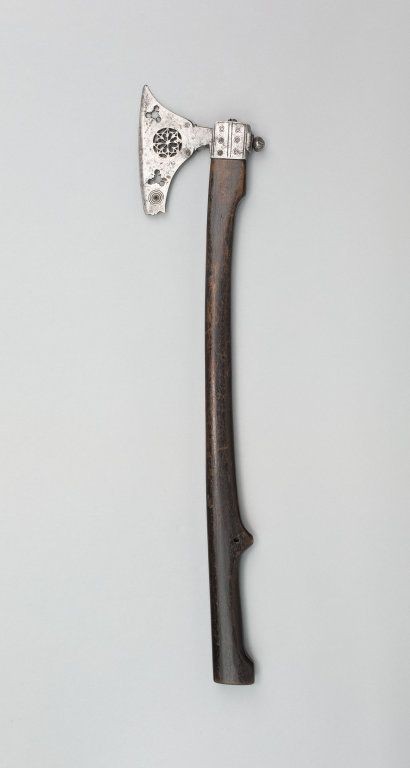
There is an important distinction between battle axes and wood cutting axes. Battle Axe heads tend to be thin, very thin, good for cutting flesh and bone, and easier to wield. Wood cutting heads are wider so as to be more robust, and split wood open more efficiently, and let’s not even talk about splitting mauls.
As such, one handed battle aces like this tend only to weigh between 1 and 4 pounds / 0.45 and 1.8kg. They can be very very light! The example is 1 lb. 7 oz. / 0.65kg.
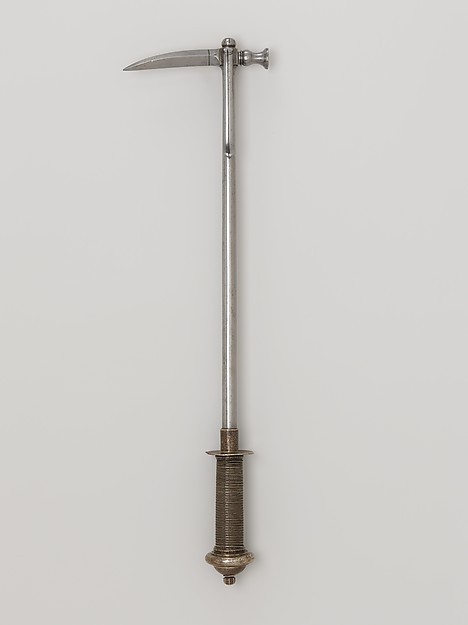
Warhammer even tend to stick to that same range, between 1 and 4 pounds / 0.45 and 1.80. This example is 2 lbs. 8 oz / 1.15kg.
It’s only once you reach polearms that you begin getting heavier weights. The weights of a polearm is greatly changed by the length of it’s shaft, which can vary greatly, so these numbers will be somewhat more flexible.
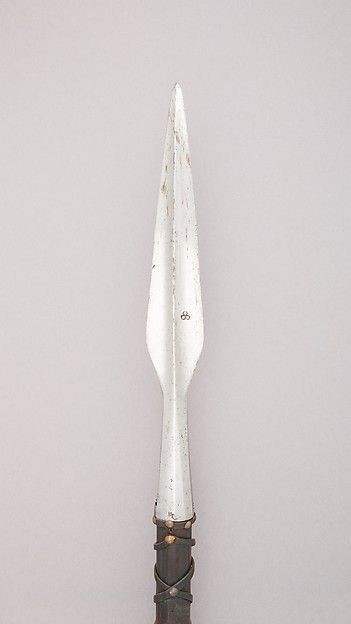
Spears tend to be the lightest polearms, often weighing between 3 and 6 pounds / 1.⅓ and 2.7kg, with this example coming in at 4 lbs. even / 1.8kg.
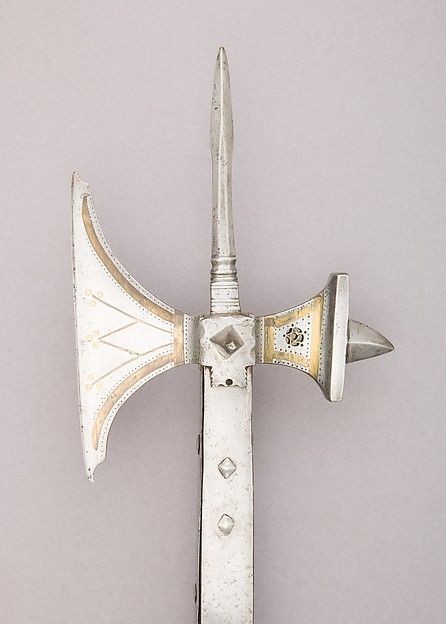
Poleaxes, tending to be on the shorter end of polearms, also tend to be lighter. Interestingly, the examples I’ve seen are quite consistent, and all weigh between 6 and 7 pounds / 2.7 and 3.175kg, though greater variation is possible. This example weighs 6 lbs. 9 oz / 3kg.
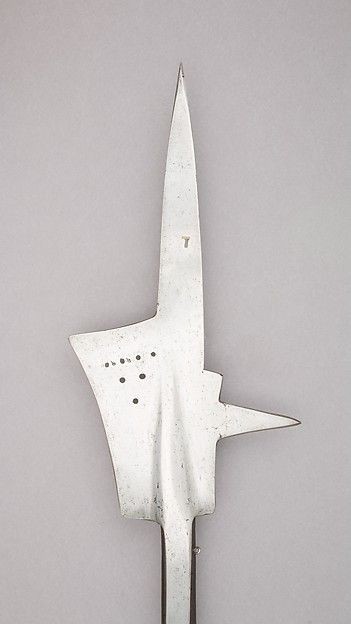
Halberds tend to be even heavier, though examples in museums tend to have hafts that are too short simply for storage and display purposes.
As such, the weights tend to be somewhat off, however we know from period sources and good modern reproductions that properly sized balberds tend to be about 8 pounds. This museum piece fits the “too light” mould, and weighs 5 lbs. 10 oz / 2.5kg.
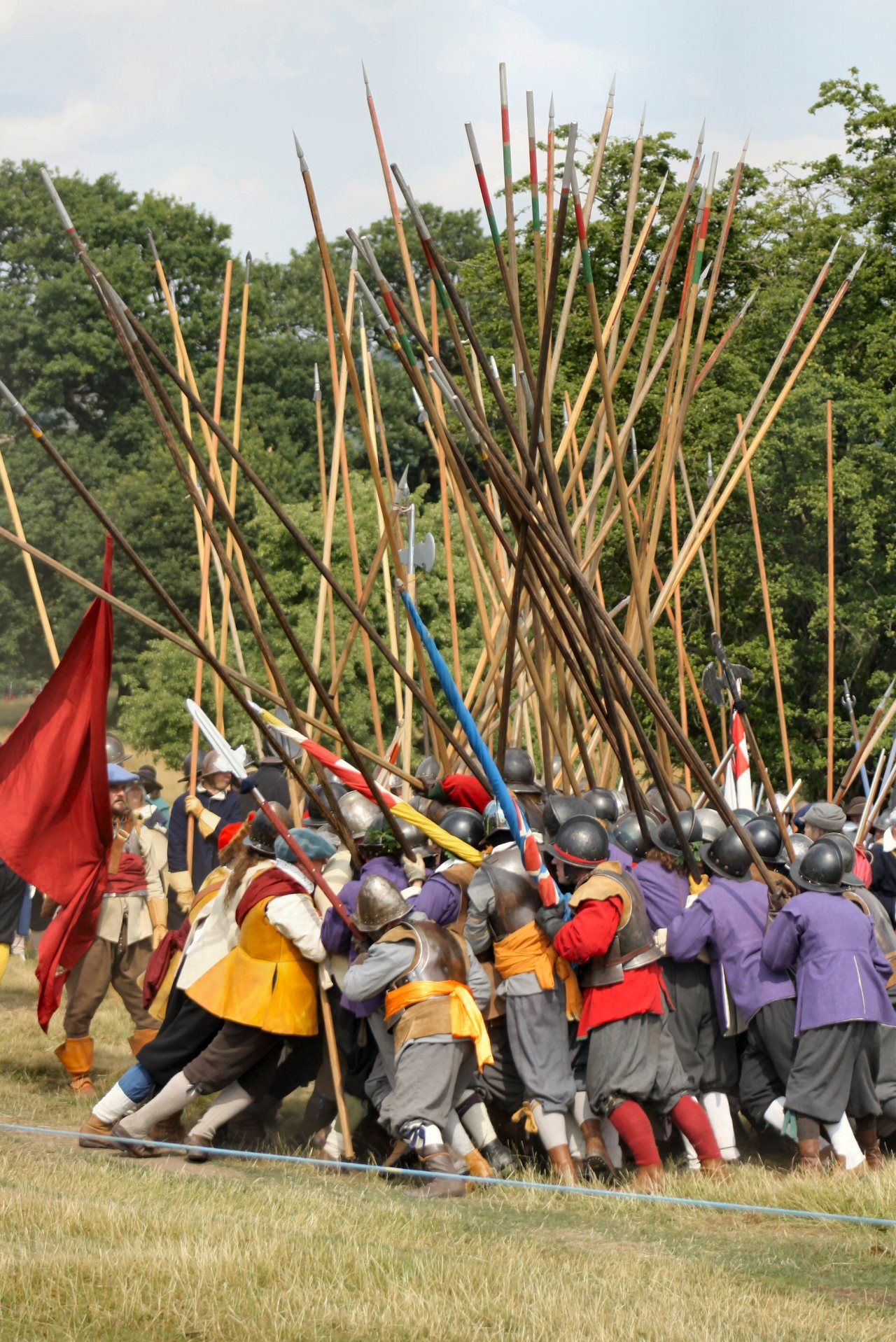
For the purposes of giving you (the reader) a proper appreciation of what the pike is, I elected to not use a museum photo for this one, so you can see their full scale.
The pike is a massive weapon, and these piles being used by reenactors in this photo are quite short. On the shorter end, they measured over 10 feet / 3m in length, and on the lookout get end occasionally hit 30 feet / 9.1m !
These could be the heaviest melee weapons typically used in medieval/renaissance warfare, and even these only weigh between 5 and 13 pounds / 2.25 and 5.9kg.
With your heaviest weapons only weighing 13 pounds at their most extreme, this paints a good picture of how light these hand weapons tended to be. Something for RPG and video game developers to keep in mind in the future.
– mod Armet
She’s referring to the Sea of Clouds and the practice of skyfishing
Lore tidbits relating to everday life in Ishgard (which by all accounts is not pretty.) I have TONS of these screenies relating to Ishgard (the Temple Leves in particular have a ton of stuff.)
More under cut: modest dress, education of the lower classes, marriage, funerals, and festivals.
So this old post got a bunch of new notes so I thought I’d add: quite a bit of this text was quietly retconned in the English localization around Patch 3.25 (I don’t know exactly when, unfortunately.) For example:
clear errors introduced during localization were fixed. (e.g. “Not on My Table”, before and after)
Ishgardian cultural backwardness old-fashioned values were toned down or exised (e.g. the attitude towards women in “Old-school Spooling (L)”, before and after)
all instances of “lying down with dragons” were changed to “falling in love with dragons,” I believe including the old 2.x MSQ.
There are a few possible explanations of the Great Retcon: it could be that some of the text were changes that the English localization liked to introduce during ARR and early Heavensward, and they were walked back to try to make the English and Japanese lore (and all localizations) more uniform. It could be that this is reflecting an actual, Watsonian change in Ishgardian attitudes and culture between the time of 3.0 and 3.3. Or it could be a decision to lower the intensity and negativity of story content generally.
I think each roleplayer can decide how to interpret this themselves; I personally like the idea that Ishgard may have already been undergoing a cultural shift before the opening of the Gates, and so while restrictive attitudes towards, for example, women (still present elsewhere such as “The Social Knitwork”, the dialogue of Duchesnelt, demographics of NPCs, etc.) may still be characteristic of the older generation, young people had already begun to move away from those beliefs before Heavensward.
Also, if you’re looking for Ishgard lore and roleplay help, I have an “Ishgardian Forms of Address” doc that tries to exhaustively explore Ishgardian titles and honorifics (and what that might mean about the culture), and I’m slowly working on a general lore compilation, currently 43 pages long, that I hope to finish up in September or so~ Please look forward to it!
Balmung has been the battleground of many a housing war through time. From the slow dawn of the housing system, to the additions of the wards, people – and especially roleplayers – have been up early to battle the queues, roll the dice and get a house. So it is no wonder that someone, at some point, would ask – How many have succeeded? How many houses do roleplayers own? That is a question not easily answered; but it is not impossible either.
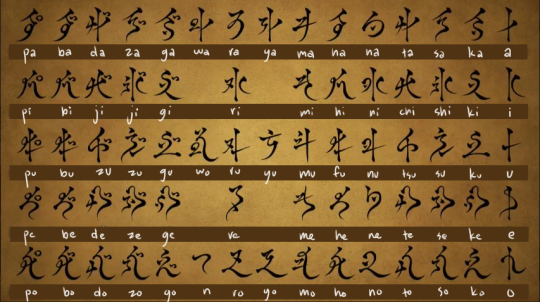
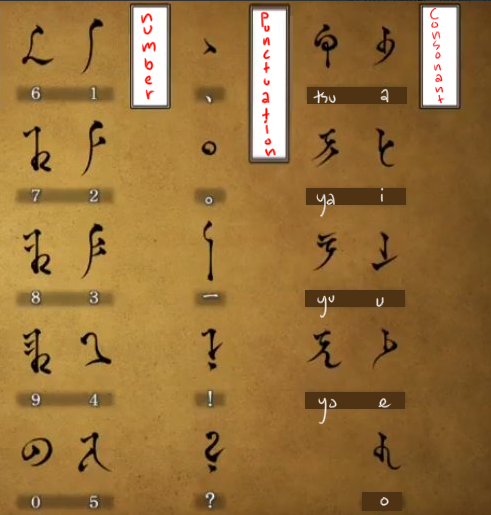
So I came across the Hingan Alphabet on twitter this morning and immediately wanted to translate it so I could throw it at my friends. I figured it would be a good idea to post it here for those who play Eastern characters but don’t know Japanese. Enjoy my awful handwriting LMAO
It’s more or less an altered version of the Hiragana alphabet!
We got some familiar symbols: numbers and punctuation marks. The consonants aren’t quite as straightforward, however, as we don’t really have them in English so I’ll try and give a quick, vague explanation.
– The tsu (referred to as small tsu, or sokuon) indicates that the consonant that immediately follows it is preceded by a glottal stop and held for an additional syllable. For example, words like gakki (musical instrument) require the use of a double consonant, otherwise, you could make an entirely different meaning (gaki justmeans brat).
– The ya, yu, and yo are used to indicate glides, or semi-vowels. Remember when your waifu went “nyaaaaaa” in your favorite Doman animes? Well NOW YOU CAN WRITE THAT IN HINGAN. NOTHING IS STOPPING YOU.
I would heavily recommend looking at a chart since this is a bit difficult to take in at face value. But you more or less take a character that is ending in i from the first chart and then add the smaller character.
So say you want to say “hya”! Take the hi character, and then add the small ya after it. If you want to say “kyu”, take the ki character, and then add the small yu after it.
– The a, i, u, e, o are used for sounds that aren’t common within the Japanese language (or Hingan in this case, I guess) such as va, vi, wi, wu, etc. so probably will only matter for those wanting to spell the names of their characters that aren’t from the Far East.
For the w sounds, you have to take the u character from the first chart and add whichever character next. So to write wi, take the u character and add the i character after it. To write wu, take the u character again and add the u character after it. Similar to glides.
For the v sounds, you’ll have to use the u character again but add what we call dakuten, or tenten. If you look at the first chart and look at the characters that start with g, z, d, and b, you’ll notice they’re exactly the same character of the characters that start with k, s, t, and n but with a little mark on the right side. That’s the tenten! Use that same mark on the u character, and you have the v sound instead of the w sound.
This also works with glides. If you want to write vya, you use the u character with the tenten, and then add the small ya character to indicate that.
– ………that was not a quick explanation. UH… yea. If it’s difficult to understand still (which, prolly is considering my shit instructions) I would heavily recommend taking a look at hiragana charts and getting a better idea. Or better yet, ask me directly or a friend who knows Japanese! Because it’s only gonna get more difficult to understand from here on out LOL.
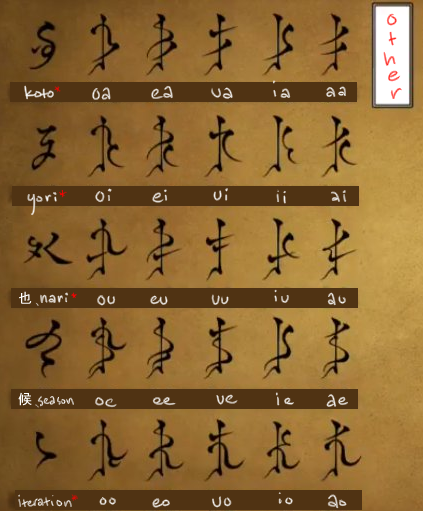
Next, we have long vowels on the right side of this chart. When the same vowel appears twice consecutively in a word, the two are pronounced as a continuous sound rather than as two separate vowels.
The 5 characters on the left side are plenty different though!
– Koto (not the instrument) and yori (not the name) are grammar particles, so I wouldn’t recommend using them unless you have a good idea of sentence structure. Pretty, though.
– Nari (也) has multiple readings. It’s used to express an exact sum of money, or a historical way of saying “to be”. I don’t think it’s their money symbol, considering they would use the yen (円) kanji to inticate that. So… uh… Who Know?
– The next one was a bit difficult to read, but it seems to be the 候 kanji, which is a literal reading of seasons, weather, climate, etc.
– The very bottom far left character is read as 々, which is an iteration mark, meaning that the sound of the previous kanji (or a sound similar to it) before it should be repeated. An example would be 色々(iroiro, various) or 早々(hayabaya, “promptly”) It also can be found in names.
I hope those explanations helped out a bit! I’m really hoping a font with the Hingan alphabet comes soon, it’d make things plenty easier I’m sure. Really looking forward to seeing folks who Hingan characters putting their names together! It’s honestly a super pretty alphabet. @_@
Thank you so much to @chelonate who helped me out with some of the translation!! You saved me dang booty….
I gotta read this so I can spend time writing Hingan for artwork
Also further to accent post I guess a few tidbits because seeing people write in a butchered accent actually kills me as someone who is actually English:
Ala Mhigan accents from what we’ve observed are essentially, North West of England accents with a branch towards the Midlands. (Mancunian, Lancastrian, Leeds, Yorkshire and so on.) It features the classic elongation of vowels, and though a deep and noticeable accent bears a hint of a sharper sound from here and there depending on tone and the word in use. If you’re looking for points of reference to fit your RP and stay accurate, I recommend finding videoclips of Coronation Street, the original Shameless, and the Royle Family. These shows boast that same accent we hear on most voice acted NPCs and are your best bet to learning an Ala Mhigan accent.
Ishgardian is a little harder to place. Though we can safely assume there’s a hint of French by the peppered use of french language here and there, characters who have been voice acted in the game have a more refined and upper class English accent as opposed to French. Given it sounds quite similar to my own current accent, I’d hedge a bet on upper class Ishgardian leaning towards being bilingual. Though the standard British accent itself can likely be heard by those who aren’t English, to me the Ishgardian accent presents itself as lacking any particular inflection – though I would argue the use of french from nobles here and there would hint towards an underlying tone.
Ishgardian lower class (The Brume) is the easiest one to place. Since Hilda and a few other non-descript NPCs are our only point of reference for this particular accent, it is safe to say the lower class of Ishgardian has a strong west country brogue, specifically Bristolian and Somerset. I’m more likely to poke your eyes out if I see you doing this wrong, if only because growing up with this accent makes you the butt of jokes when all your friends are not from the west country, but I digress – you’ll be familiar with this accent as ‘The Pirate Accent’. There’s a reason behind that I won’t waffle on with, something something Blackbeard. If you utilise this accent in RP, then I’ll give you a quick tip – we can’t pronounce anything with two t’s in the middle; “butter” becomes “bu’er” with a stress on the ‘er’. Any word starting with a ‘h’ promptly drops that ‘h’ – for example, a traditional west country phrase I could use here would be “Ark at ‘ee” which roughly translates to “look at him”. It’s an accent that relies on a lot of phrasing and tone to get the point across, as can be seen above – which is often used in a sarcastic manner. Please don’t make a trend of using it on Balmung, I’ll cry and feel bullied. To further on the point of dropping the ‘h’ before words, as a result we tend to simply say the word from the second letter in with a harsh sound. “Hawk” becomes “’awk”, “Him” becomes “’im”, so on do forth. R’s in words are often stressed heavily, which is what we’re well known for. West country specifically has a lot of personal phrases that aren’t heard anywhere else across the country as we tend to blend our words a lot – so if your character is from the Brume and you want to stay accurate, I’d highly recommend having a look round on the internet for Bristolian phrases etc and watch a few videos! Given voice acted NPCs with the exception of Merlwyb, I would argue that this accent is also very similar to Limsan if flavour text is to be applied to accents.
As for Gridanian and Ul’dahn accents – both seem very standard. There’s no particular inflection that I’ve picked up on so far, though it’s likely to have been influenced in some areas of the cities with medleys of others. However, nobility tends to bear a very similar accent to ishgardian nobility with a few subtle differences, most of which are evidenced in Nanamo. The British accent is slightly stronger, but more importantly the voices I’ve observed from Nanamo and Kan-e-Senna (my two points of reference for these) tend to be very ‘plummy’ as it were – so very finely pronounced with each word measured. Plummy refers to speaking as though one is holding a plum in one’s mouth as they speak, as such, which leads to the traditional upper class British accent you often hear.
“Mama,”
the raven-haired boy asked her, watching her deft, tanned hands as they
worked. He had seen her do this a
million times, but he still watched with transfixed citrine eyes. “What do the symbols mean?” From his perch, he swung his legs back and
forth with childish enthusiasm. Even in
the darkness of their sacred cave, he burned like a star. His aether fell around her like comforting
wisps, thumbing through her very heart and soul. It slid her into ease. He was always so much
more than he could contain. Even as a
babe at her breast, his power had caused her knees to tremble. Her boy would shake the heavens. The scent of his aether told her so.
His
mother smiled at him, offering a hand.
When her delicate fingers stroked his hair, he grinned back widely at
her, joy radiating from him like the sun.
She marveled over her firstborn for a few long moments, tracing her
amber eyes over the stripes on his face and his young, dirty hands. He looked nothing like his father—his skin
sun-kissed and his nose slightly hooked.
His smile caught her breath, stealing it away into the darkness of their
dank cave. The boy’s mother stroked
through his mop of hair once more and then set about to writing upon the ground
in sanguine.
“This is
how we call our friends,” the Seeker woman’s voice was airy, her fingers
zig-zagging the marks upon the black stone floor. Each dash and dab was precise and crafted
with the elegance of a swan. Her hands
knew the trails and shapes well, as though each mark was a line in her own
palm.
“Oh,”
the boy’s lips creased into a tiny frown, brow furrowed with consideration. “Can
we call Father from it?”
Her
finger hesitated on the symbol she drew.
“No,” she said back, not looking at him.
Her determination was veiled by the faint glistening of tears. Sacrifices had to be made, her mind whispered
to her, and yet her heart ached. What a
treacherous path she had been set upon.
But her resolve was intertwined with her own blood. Generations had waited for this day to come,
hopes held for centuries. The scattered
fragments would become whole again. Just
as the elders foretold. Just as the Sun
Maiden decreed. Nothing was spared the
hand of fate. Destiny was never to be
denied.
“Reunion,”
whispered the black-haired woman, pulling away from her handiwork. A filthy rag mopped up the liquid at her
fingertips and she was careful to clean even the undersides of her lengthy
nails. This time, her son did not reply
though she saw the cogs turning within his youthful mind. From his perch, he had a decent enough view
of the circle and its symbols. He paid it
some heed—perhaps more than the average night.
Perhaps even he, too, could sense the strange foreboding in the air.
She
extended a hand to him, to help him down from the ledge he sat upon. He took it and she could feel his aether’s
warmth and simultaneous frost. There was
so much about him that was shrouded in enigma, and yet she knew his path. All she could do was guide him… Walking it
was up to him and him alone. Without
thinking, she pulled him close to her.
His tiny arms wrapped around her waist and she thumbed through his
growing raven hair, painted lips smiling ever so bitterly at him.
“When
can we go back to the tribe again?” asked the boy.
“Shhh,”
his mother cooed, caressing his head. “Soon.”
A
painstaking moment passed before her sunny yellow eyes found their way to the
metallic podium at the heart of her painted circle. It was crested with cold, gray stone that had
become moist from the humidity of their cave.
A cluster of red candles burned already and their neighbor was found in
the form of a bestial skull. Salts were
gathered within a bowl nearby, their tone a deep violet hue. Her fingers tightened around her son’s hair
at the sight of the knife, but she distracted herself from it before her doubts
could deter her.
“Help me
light the candles,” she whispered to her son and he looked up at her with eager
eyes. She gave him a stick and produced
a flame from her hand. As he took his
miniature torch and began to grace each of the wax candles about the circle,
his mother hummed softly a lullaby melody.
When the
task was complete, he doused his fire into the nearby water—a languid
underground river provided background music for their solemn duty. She watched him, heart fluttering with
knowing. With dread. She extended her hand to him once more and he
ran to her, wrapping his arms around her neck this time as she knelt.
“Are you
ready?” she murmured to her son, voice cracking.
“Mhm!”
the boy said with a nod. “I can’t wait
to meet my new friends. Do you think they’ll like playing hide and go seek?”
“I…” his
mother faltered but she carried on with her resolve. “Yes. They will like that very much, I think.”
“Awesome,”
the boy smiled.
“Remember
the words I taught you,” said the mother to her son. “And no harm will come to
you. You are the One Bathed in
Sunlight. For as long as the sun shall
shine, the darkness will never conquer.
Take the reins of evil itself, my son.”
She kissed his forehead,
her arms snaking around his tiny frame.
How small he was… but how fierce.
How young he was… and yet there was elderly knowledge in his eyes. She shivered at the thought of his destiny—out
of fear and excitement. Only few mortals
could dream of wielding the power of the fell gods that lurked in places the
bold would dare not wander.
With a smile
upon her ruby lips, the mother set her child upon the altar.
alternatively: Behold My Long-Winded and Speculative Answer To Questions Pertaining To Duskwight In Coerthas.
I got thinking on this originally to answer the related questions “Are there Duskwights in Coerthas?”, “Can I play an Ishgardian Duskwight?”, “What do Ishgardians think of Duskwight Elezen?” but the process of considering an answer led me to contemplate the larger history of Elezen populations and migrations.
He was going to catch hell for this, and he knew it.
Riski shrugged his coat up higher and ducked his head deeper
into the fur-lined collar as he waited for a gust of wind to die back down.
Snowflakes swirled around him, making the wind a visible hand that tugged at
his hair and chilled the tips of his ears. He kept his hands in his pockets,
one curled around the envelope that crinkled under the pressure of his clenched
fist.
The wax of the broken seal was cold and brittle against his
palm, hard edges sharp as little blades that dug into the soft undersides of
his fingers. Still, he almost believed that he could feel the image emblazoned
in the seal. That was paranoia talking, undoubtedly, but… he’d stared at the
wax crest so long before opening the letter that the unicorn sigil was burned into
the backs of his eyes.
The contents had been cryptic and the letter itself
unsigned. He did not recognize the neat, crisp hand that had written it; it was
not the strong script he remembered from his mother’s collection of love
letters, at least, although that did little to assuage the anxiety that built
beneath Riski’s thin veneer of calm. He could have ignored it. He could have
thrown it in the fire and to hell with the consequences.
But here he was, standing in the shadow of the Vault as the
letter had requested. The moon was hidden behind the seemingly omnipresent
cloud cover, leaving the deserted streets without even that illumination. It
gave whoever had sent the missive all the more ability to stay hidden until the
last moment.
Before Riski’s imagination could torment him further, the
soft scuff of boots on stone reached his long ears. He straightened his spine
and squared his shoulders as the figure walked slowly into sight. The stranger
made no effort to hide themselves, instead walking right down the center of the
path. As he got closer, Riski was able to get a better look at who he was.
Violet eyes went wide and Riski took an involuntary step
back. He tried to swallow, but his mouth had gone dry.
“Hello once again, Riski Chanse,” the man said, his voice
pleasant. “Or should I say instead, welcome home, Aurelien Descoteaux?”
Outside, the salt air is bracing, but below decks the stench of death, waste, and unwashed bodies is overpowering. Throughout the ship, crew members lie in twisted heaps, their faces contorted in horror and their bodies devoid of aether. Standing in the dim hold, Mirette gazes at an assortment of large cages, each crammed with filthy, wretched children.
Most of the youngsters are huddled together, either hiding their faces or staring at Mirette in terror as she lets her latest kill crumple to the floor. But a few of the bravest stand as close as they may, their little hands wrapped around the bars of their cages as they gaze at Mirette with awe… and hope.
One Lalafell girl with matted green hair and huge brown eyes catches Mirette’s attention. There’s something very determined in the way she holds herself – kidnapping and enslavement haven’t broken her spirit yet.
“What’s your name?” Mirette asks her, stepping over the body of her victim as she approaches the cage.
The Lalafell offers her a tremulous smile. “Loloka. Have you come to take us home?”
Mirette frowns. Home? The word echoes in her mind, conjuring images of a life long past. Home. Yes, she’d been acquainted with that word, once. But she suspects it means something different for her than to these shivering youngsters.
Killing slavers was her only goal today. Feeding on aether and crushing predators – most of them men – was her idea of a pleasant way to spend the afternoon. But she didn’t plan this far, somehow. Bast had told her about the slavers and sent her on her way to feed, but he never told her what to do with the children. Maybe he’d expected her to feed on them, too.
Tempting. Very tempting. There are ample food sources here, many of them on the verge of blossoming into aether-rich adults. But there’s something about the expression in Loloka’s eyes that stops her. This girl clearly considers Mirette to be her savior.
What would it be like, playing the hero? How would it feel to know that she had saved lives instead of consuming them?
“I’ve just killed all the crew,” Mirette says slowly, a plan forming in her mind. “Can any of you help me get this ship to shore?”
Loloka smiles. “Many of us are Limsan. We can manage.”
And that’s how Mirette finds herself doing something good and becoming a surrogate aunt to dozens of children in the process.
I noticed the new 3.55 PVP map is named Lichenweed and found it familiar, so I did some poking. Lo and behold, Lichenweed was a location in 1.0! It was near Camp Crimson Bark, in the Western Shroud, which is not a currently accessible overworld map location, just as Owl’s Nest was repurposed as a PVP map.
During patch 1.23, Crimson Bark was one of several aetheryte locations being corrupted and drained by Atomos, and surrounded by hordes of Voidsent. The aetherytes thusly affected turned from blue to orange, similar to how we now see corrupted crystals in areas such as Mor Dhona and Northern Thanalan.
You can’t get they-uh from he-uh.
The Western Shroud was accessible from Central and Northern Shroud by way of intersecting paths, seen on the right side of the above image. Camp Crimson Bark is in that lone green square almost dead center. From there, you had to go north and then west to the brighter green square just below the large, vaguely cross-shaped lake. That is where the aethereal node for Lichenweed was located.
Aethereal nodes acted very similarly to aetherytes in that you could attune to them and gain easier access to further outlying areas where an actual aetherytes didn’t exist. These were handy in the much larger, sprawling overworld maps in 1.0. I wish we had a few of them now. Other nodes connected to Crimson Bark were Turning Leaf and Murmur Rills.
The 1.0 quest Forever Taken took you through Crimson Bark en route to Mor Dhona. This trip was a royal pain in the ass back in the day. Level 85+ mobs actually existed on the world map.
(images sourced from reddit)
The stone for Byregot the Builder was also located in one of the lakes in this area before the Calamity. It is now in the South Shroud.
This is Lichenweed today, clearly overtaken by the lakes since the Calamity, and your new PVP map for season 4.




 Roses And Grimoires
